

Quick Summary
In Chinese culture, dragons are powerful symbols associated with good fortune, authority, prosperity and the natural world. Often linked to water, rain and agricultural abundance, they have appeared in Chinese mythology, art and ceremonies for thousands of years. Their meanings vary across historical periods, traditions and artistic settings.
- Chinese dragons are traditionally associated with power, good fortune and prosperity.
- Their connections with water and rain reflect the importance of agriculture and seasonal rainfall.
- Dragon imagery has historical associations with imperial authority and appears in festivals and celebrations.
- Chinese and Western dragon traditions developed different symbolic meanings, although neither can be reduced to a single interpretation.
Table of Contents
- The Origins of the Chinese Dragon and Its Real-World Inspirations
- The Core Symbolic Meanings of the Chinese Dragon
- Chinese Dragon vs Western Dragon Differences and Why They Matter
- The Enduring Significance of Chinese Dragons
- Frequently Asked Questions
The Origins of the Chinese Dragon and Its Real-World Inspirations
The Chinese dragon, known as lóng (龙), is one of the most recognisable figures in Chinese mythology and cultural history. Dragon-like forms have appeared in Chinese art and ceremonial objects for thousands of years, long before the familiar dragon imagery seen in modern celebrations.
The precise origins of the Chinese dragon remain a subject of scholarly discussion. Some interpretations connect early dragon imagery with snakes, crocodiles and other animals, while others examine the influence of ancient beliefs about water, weather and the natural world.
Over time, different artistic and mythological traditions contributed to the dragon's evolving appearance. Chinese dragons are often depicted with elongated, serpentine bodies, claws, scales and distinctive facial features.
Rather than representing a single creature with one fixed meaning, the Chinese dragon developed into a complex cultural symbol. Its significance has changed across dynasties, regions and traditions, reflecting the beliefs and values of the people who portrayed it.
The Core Symbolic Meanings of the Chinese Dragon
Chinese dragon symbolism encompasses several interconnected ideas, including power, authority, good fortune, prosperity and the forces of nature. These associations help explain why dragon imagery has remained culturally significant for so many centuries.
Power and imperial authority: Dragons became closely associated with Chinese emperors, representing sovereign authority and the legitimacy of imperial rule. Particular dragon designs were historically used in imperial clothing, architecture and ceremonial objects.
Water, rain and agricultural prosperity: In traditional mythology, dragons are closely connected with rivers, lakes, seas and rainfall. Dragon kings appear in stories as powerful beings associated with different bodies of water, reflecting the importance of rain and successful harvests.
Good fortune and auspiciousness: Dragon imagery is frequently associated with positive fortune, vitality and prosperity. It remains prominent in celebrations, decorative arts and traditional festivities.
Wisdom and spiritual significance: Dragons can also represent extraordinary knowledge, transformation and powers beyond ordinary human experience. Their precise meanings depend on the stories, traditions and settings in which they appear.
Together, these associations make the Chinese dragon far more than a decorative mythical creature. Its imagery reflects a long history of cultural, spiritual and artistic traditions.
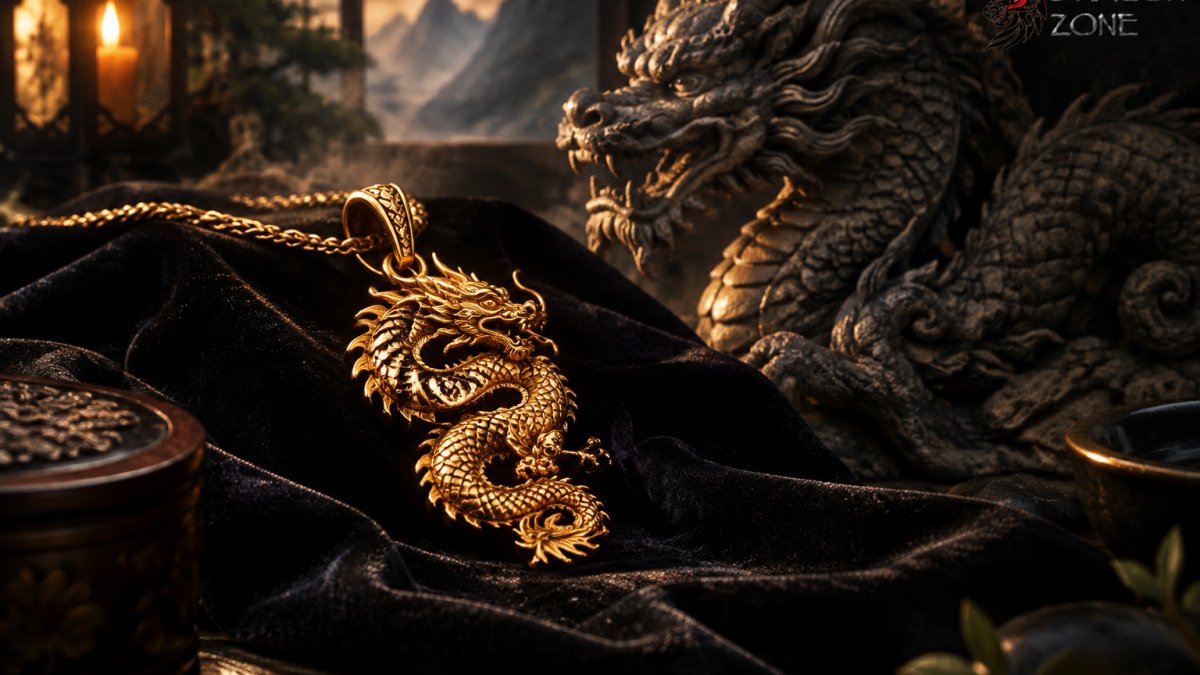
The following table summarises some of the Chinese dragon's most widely recognised symbolic associations.
Symbolic theme |
Cultural significance |
|---|---|
Power and authority |
Historically associated with emperors and imperial rule |
Good fortune |
Represents auspiciousness, prosperity and positive fortune |
Water and rainfall |
Connected with rivers, seas, rain and agricultural abundance |
Wisdom |
Associated in some traditions with extraordinary knowledge and spiritual power |
Vitality and transformation |
Reflects powerful natural and supernatural forces |
Chinese Dragon vs Western Dragon Differences and Why They Matter
Although Chinese and Western dragons share a familiar name in English, their appearances and symbolic roles developed through different cultural traditions.
Chinese dragons are commonly portrayed with long, serpentine bodies, scales, claws and flowing whiskers. They are frequently associated with water, rainfall, authority and good fortune. Traditional artwork often depicts them moving through clouds or above waves, emphasising their connections with natural forces.
Western dragons, particularly those found in medieval European legends, are often depicted as large, winged reptiles. Many stories associate them with fire, guarded treasure or confrontations with heroic figures. However, Western traditions also include protective dragons, wise dragons and dragons used as symbols of strength.
These differences are not absolute. Chinese mythology includes dragons capable of destructive behaviour, while European folklore contains a wide variety of dragon figures beyond the familiar fire-breathing monster.
The contrast is most useful when understanding how different societies developed their own meanings around mythical creatures. A dragon in a Chinese festival, an imperial artwork and a European medieval legend may look or behave differently because each belongs to a distinct cultural setting.
Recognising these differences helps us appreciate dragon imagery as an expression of cultural history rather than treating all dragons as interchangeable fantasy creatures.
The Enduring Significance of Chinese Dragons
Chinese dragons remain powerful cultural symbols whose meanings extend far beyond mythology. From their historical connections with imperial authority to their associations with rainfall, prosperity and good fortune, they reflect centuries of artistic and cultural development.
Today, dragon imagery continues to appear in festivals, traditional art, architecture and contemporary designs. Understanding these symbols allows us to appreciate the history and meaning behind the imagery rather than seeing dragons simply as fantasy creatures.
Whether you're exploring Chinese mythology or admiring dragon-inspired artwork, learning about these traditions offers a deeper appreciation of one of the world's most enduring mythical figures.
Frequently Asked Questions
What do dragons represent in Chinese culture?
In Chinese culture, the dragon is an auspicious symbol associated with power, authority, wisdom, strength and good fortune. It is traditionally linked to rain, water and harvests, which made it important to farming communities. Dragon imagery has long been connected with the emperor, but it also appears in everyday contexts such as festivals and celebrations. Its meaning shifts with region and period, so the same figure can suggest protection in one setting and prosperity in another.
Are Chinese dragons considered good or evil?
Chinese dragons are generally regarded as benevolent and auspicious rather than evil. Unlike many Western dragons, which are often portrayed as fearsome threats to be defeated, Chinese dragons are typically associated with good luck, protection and rainfall. Stories do describe dragons acting with anger or causing storms, but these are usually presented as natural forces to be respected rather than purely wicked creatures.
Are there real animals that inspired dragon myths?
Many researchers suggest that dragon legends may have been shaped by real animals and by observations of natural events. Large reptiles, snakes, crocodiles and fossil discoveries are often proposed as possible influences, alongside storms and lightning. These links are interpretations rather than settled facts, so it is best to treat them as one of several explanations for how the dragon image developed.

0 comments