

Quick Summary
The Lisa Parker art style is fantasy illustration built around a single watchful animal, usually a wolf, cat or owl, set against a dark palette with one warm or luminous light source. Its compositions favour an intimate forest or night-sky setting, with dense detail on the subject and open, shadowed space around it. Symbols such as pentagrams and antlers frame the scenes, inviting interpretation rather than fixed meaning.
- Each artwork usually centres one creature, often placed close to the middle of the frame.
- Dark blues, blacks and greens form the ground, lit by one small warm or cool accent.
- Detail is dense on the subject and open in the background, keeping the scene quiet.
- Check listings for the artist, artwork name, manufacturer and retailer before assuming attribution.
Table of Contents
- What Defines Lisa Parker's Fantasy Art
- Animals and Nature as Recurring Subjects
- Atmospheric Light and Magical Settings
- Fine Detail and Visual Storytelling
- Reading the Symbolism in Lisa Parker Artwork
- How to Identify Lisa Parker Artwork
- Lisa Parker Artwork on DragonZone Products
- The Magic Behind Lisa Parker's Artwork
- Frequently Asked Questions
Lisa Parker's fantasy artwork has a distinctive atmosphere, combining animals, natural settings and mysterious details that invite a closer look. From watchful wolves beneath starry skies to black cats surrounded by books and candlelight, her illustrations often suggest magical stories unfolding just beyond the frame.
DragonZone Australia carries a selection of decorative products featuring Lisa Parker artwork, including shoulder bags and wall decorations. In this guide, we'll explore the visual elements that make her work recognisable, examine some of her recurring themes and explain how to identify artwork attributed to Lisa Parker.
What Defines Lisa Parker's Fantasy Art
Labels such as fantasy, gothic and magical describe the mood of the work, but they say less about how the pictures produce that effect. The more useful approach is to break the style into the visual decisions that recur across the designs, and to be clear that these are observations drawn from specific artworks rather than claims about the artist's entire career or working method.
Composition: one subject, held still
The strongest recurring habit is a single dominant subject placed close to the centre of the frame and held in a steady, watchful pose. In the Wild One design, the wolf faces the viewer directly; in Guidance, the adult wolf and pup are stacked vertically on the tree roots; in The Witching Hour, the cat lies across the books as the visual anchor.
A second compositional pattern is the use of a vertical axis. Antlers, tree trunks, candle flames and the standing wolf's body all pull the eye upward, which gives even a small ornament or bag panel a sense of height and occasion.
Colour: a dark ground with a warm point of light
The palette is consistently restrained. Deep blues, near-blacks and muted forest greens form the ground, and the image is lit by one or two small warm or cool accents, a candle flame, an aurora, a pair of luminous eyes. This is a classic chiaroscuro arrangement: most of the picture sits in shadow, and the light is concentrated where the artist wants attention. The effect is gothic without being gruesome, because the darkness reads as atmosphere rather than threat.
The balance shifts between designs, so treat the dark-ground-with-a-warm-accent pattern as a tendency rather than a rule.
Texture and detail: dense where it matters, open where it doesn't
Detail is distributed unevenly on purpose. Fur, bark, book spines, scroll edges and foliage are rendered with close attention, while large areas of sky, shadow and background are left comparatively open. That contrast does two things: it rewards close inspection of the subject, and it prevents the image from feeling crowded. The open areas also give the composition room to breathe, which is part of why the scenes feel quiet rather than busy.
A practical checklist
If you want to test whether a piece sits in this style, run through the following:
- Focal creature: a single animal or paired animals at or near the centre.
- Gaze: the subject usually looks out at the viewer or toward a second figure.
- Palette: dark blues, blacks and greens with one warm or luminous accent.
- Light source: candle, moon, aurora or glowing eyes, with generous shadow.
- Setting: forest, study, night sky or ancient tree, intimate rather than epic.
- Detail: dense texture on the subject, open space in the background.
- Motifs: pentagrams, antlers, scrolls, books or foliage used as framing devices.
When most of these appear together, the work is likely to be in her style, though style alone is not proof of authorship, which is why attribution and manufacturer details matter when buying.
Animals and Nature as Recurring Subjects
Animals are central to the Lisa Parker art style, appearing throughout her imagery. Wolves, cats, owls and other creatures appear across many artworks, usually placed in forests, on tree roots, or in settings that suggest a connection between the animal and the natural world. Rather than treating animals as decoration, the compositions often position them as the emotional centre of the scene.
Nature provides the framing. Gnarled trees, misty forests and night skies appear repeatedly, creating a sense of wildness that feels both beautiful and slightly untamed. The natural settings are rarely realistic in a documentary sense; they are stylised, with lighting and colour chosen to serve the mood of the piece.
Wolves, Cats and Other Creatures
Wolves are among the most prominent subjects in Lisa Parker's work. On the Wild One Wolf Shoulder Bag, a grey wolf with piercing blue eyes stands at the centre of a design framed by a pentagram and antler motif beneath a starry sky.
Cats appear with a different tone. The Witching Hour Shoulder Bag shows a black cat resting across leather-bound books beside a flickering candle, with scrolls nearby. The scene suggests a secret study, and the cat's relaxed pose adds a note of playful mystery.
Across the designs, a few subjects and settings recur, and the table below lists the ones the article describes in the artworks it covers.
Artwork |
Subject |
Setting or detail |
|---|---|---|
Wild One |
Grey wolf with piercing blue eyes |
Pentagram and antler motif under a starry sky |
The Witching Hour |
Black cat |
Resting across leather-bound books beside a candle |
Guidance |
Adult wolf and pup |
Tree roots beneath an aurora-lit sky |
Lisa Parker artwork (general) |
Wolves, cats, owls |
Forests, tree roots, night skies |
Atmospheric Light and Magical Settings
Light is one of the clearest signatures in Lisa Parker's work. Soft, low light sources, such as candles, moonlight and auroras, shape the scene and direct attention to the subject. Shadows are used generously, so the viewer's eye moves from the bright focal point into the darker surroundings.
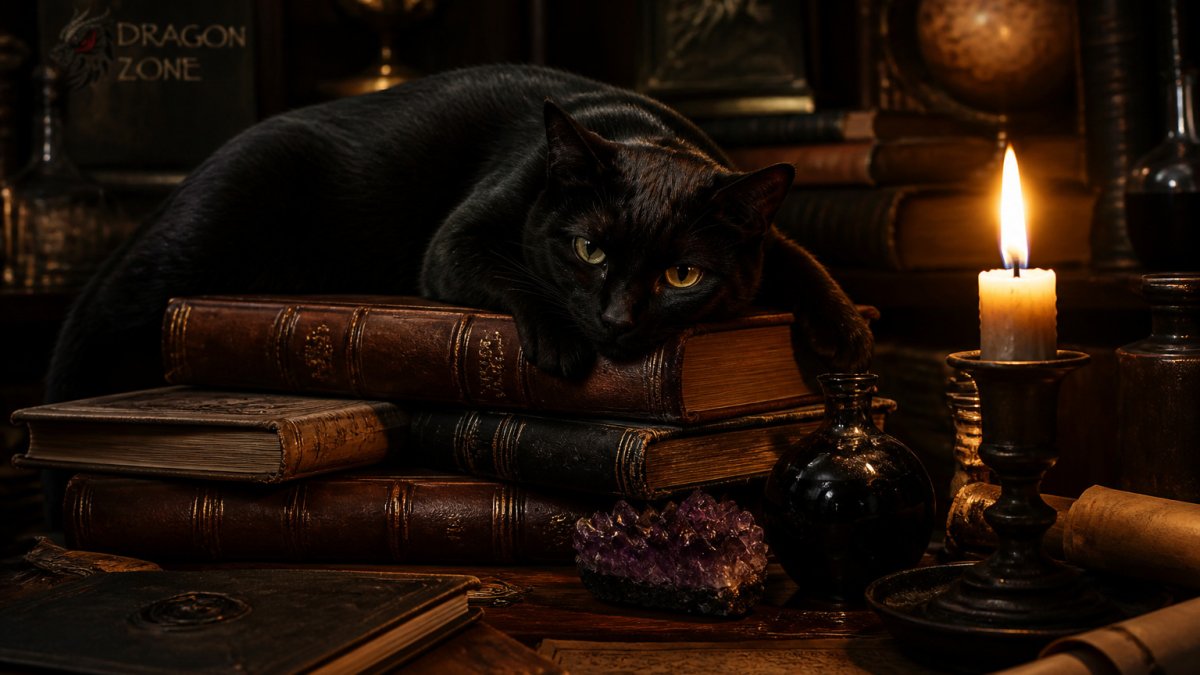
The magical settings are typically intimate rather than epic. A study lined with books, a clearing beneath the stars and a forest path suggest places where something unusual might happen. This sense of a hidden moment, rather than a grand battle or landscape, is part of what makes the artwork feel personal.
Fine Detail and Visual Storytelling
Detail draws viewers in. Scrolls, pentagrams, antlers, book spines and foliage reward close inspection, and many pieces contain small elements that suggest a larger narrative. The Guidance Wolf & Pup Shoulder Bag, for example, shows an adult wolf standing on the roots of an ancient tree while a pup looks up beneath an aurora-lit sky.
This storytelling approach is what gives the artwork its sense of narrative. Each image implies a before and after, leaving the viewer to imagine what led to the moment shown and what might follow. That open-ended quality is a large part of the appeal for collectors.
Reading the Symbolism in Lisa Parker Artwork
Symbolism in Lisa Parker's work is best read as interpretation rather than fixed meaning. Pentagrams, candles, black cats and wolves are all motifs with long associations in folklore, mythology and gothic art, and their presence invites the viewer to bring their own meanings to the piece.
Wolves, for instance, can suggest loyalty, guardianship or wildness, depending on context. A wolf and pup, as in the Guidance design, may read as protection or the bond between generations. A black cat beside books and candlelight may evoke witchcraft-inspired imagery or simply a love of quiet, scholarly spaces.
How to Identify Lisa Parker Artwork
Recognising a style and confirming an artist are two different jobs, and the second is where most guides fall short. A picture can look like Lisa Parker's work without being by her, and a product can carry her artwork without the retailer being the artist. Keeping those categories separate is the key to identifying pieces accurately.
Step one: read the image against the style traits
Start with the visual checklist above, focal creature, watchful gaze, dark palette with a warm accent, intimate setting, dense detail against open background, and framing motifs such as antlers, pentagrams or books. The more of these are present and working together, the more confidently you can say the piece is in her style. Use specific designs as reference points: the direct wolf gaze and pentagram-and-antler frame of Wild One, the cat-over-books arrangement of The Witching Hour, and the adult-and-pup composition of Guidance each show the traits in a different combination.
Step two: separate the four things a listing describes
When researching fantasy artwork and merchandise, it helps to distinguish four separate things:
- The artist: The person who created the original artwork.
- The artwork: The individual illustration or design, such as Alliance or Guidance.
- The manufacturer: The business responsible for producing a physical merchandise item.
- The retailer: The shop offering that product for sale.
A shoulder bag featuring Lisa Parker artwork is merchandise displaying a reproduction of her illustration, not the original artwork itself.
Look for clear artist attribution, an identifiable artwork title and relevant product information. Manufacturer or licensing details can provide additional context when available, but a retailer's description alone does not independently establish authenticity.
Step three: check the source before you buy
Look for clear attribution to the artist, a named artwork, and a stated manufacturer. If a listing is vague about any of these, treat it as unconfirmed rather than assuming.
Watch out: a familiar motif, a black cat, a wolf, a pentagram, is not by itself evidence of authorship. These are widely used symbols across fantasy and gothic art, so style matching should always be backed up by attribution.
For a broader approach to spotting genuine pieces, our guide on how to identify authentic fantasy art is a useful next step.
Lisa Parker Artwork on DragonZone Products
DragonZone carries a selection of products featuring Lisa Parker's fantasy artwork, allowing collectors to enjoy her illustrations in different decorative and practical formats.
The Wild One Wolf Shoulder Bag, Guidance Wolf & Pup Shoulder Bag and The Witching Hour Shoulder Bag each feature a different scene, from watchful wolves to magical feline imagery. These designs demonstrate how fantasy illustrations can be incorporated into everyday accessories.
For home displays, Lisa Parker's artwork also appears on decorative items and ornaments, offering another way to enjoy the atmosphere and storytelling found in her illustrations.
Explore the Lisa Parker Fantasy Artist collection at DragonZone to discover more artwork-inspired products.

The Magic Behind Lisa Parker's Artwork
Lisa Parker's fantasy artwork invites viewers into a world where familiar animals, natural landscapes and mysterious details come together to suggest stories beyond the canvas. Her use of atmospheric lighting, carefully arranged compositions and intricate visual details gives many of her illustrations a distinctive sense of wonder.
Whether you're drawn to wolves beneath the stars or black cats surrounded by magical objects, exploring these artistic elements can deepen your appreciation of her work.
Discover more of these enchanting designs through DragonZone's collection of Lisa Parker artwork-inspired merchandise.
Frequently Asked Questions
What is Lisa Parker's art style?
Lisa Parker's fantasy artwork is recognisable for its combination of wildlife and nature subjects, atmospheric lighting, and magical settings rendered with fine detail. Wolves and cats often sit at the centre of a composition, set against starlit skies, forests or candlelit interiors. When describing her style, it helps to focus on the specific artwork in front of you, since individual pieces vary in palette and subject.
What animals appear in Lisa Parker's fantasy artwork?
Wolves and black cats are two animals that feature prominently in Lisa Parker artwork sold through DragonZone. The Wild One and Guidance designs show grey wolves, one of them accompanied by a wolf pup, while The Witching Hour centres on a black cat resting among books. The animals usually anchor the composition and seem to carry much of the mood of the piece.
What do cats and other animals symbolise in Lisa Parker's art?
Symbolism in art is an interpretation rather than a fixed code, and Lisa Parker has not been quoted here explaining her intentions. Viewers often associate black cats with mystery and witchcraft-inspired imagery, and wolves with wildness, loyalty and family bonds. In Guidance, the adult wolf looking down to its pup can be read as protection and trust. These readings are suggestions you can test against the artwork itself rather than definitive meanings.
How can you identify a Lisa Parker artwork?
Look for the artist credit and the design title on the product or listing, which for DragonZone items is stated in the product description. Visually, her work often pairs a sharp, detailed animal with a dark, starlit or forest backdrop and warm points of light such as candles or an aurora. Always check the listing or packaging rather than relying on style alone, since similar fantasy artwork exists from other artists.

0 comments