

Table of Contents
- Why Collect Fantasy Art in 2026?
- Understanding Licensed Fantasy Art Prints
- How to Display Fantasy Figurines With Impact
- Caring for Fantasy Art Collectibles: A Practical Guide
- Spotlight on Fantasy Artist Merchandise in Australia
- Authenticity and Licensing: What Collectors Should Know
- Where to Find Fantasy Art and Events in Australia
- Commissioning Custom Art: What to Expect
- Conclusion: Building a Fantasy Art Collection You'll Love
- Frequently Asked Questions
Last Updated: October 3, 2026
Why Collect Fantasy Art in 2026?
Fantasy art collecting in Australia has moved from a niche hobby into a genuine pastime.
This guide from Dragon Zone is for anyone starting a collection or adding to one. We'll cover the forms fantasy art takes, how to display and care for pieces, and what licensing means.
The appeal is easy to understand. A hand-illustrated dragon or a sculpted figurine carries a kind of visual storytelling that generic decor rarely manages.
Understanding Licensed Fantasy Art Prints
Licensed fantasy art prints are reproductions of an artist's work made and sold under a formal agreement between the artist and a publisher or manufacturer.
That chain matters: a licensed print is a reproduction authorised by the person who made the original. An open edition print is unlimited and unsigned, while a limited edition is capped at a stated number, often numbered and sometimes signed.
Original Artwork vs Open Edition Prints
Original artwork is the piece the artist made by hand: a painting, drawing, or sculpt. There is only one.
Originals suit collectors who want a singular object. Open edition prints suit anyone building a collection around visual impact rather than exclusivity, and they're a sensible entry point.
Between those two sits the limited edition print, which offers a defined run at a more accessible level than an original.
How to Display Fantasy Figurines With Impact
Displaying fantasy figurines well comes down to three things: light, height, and restraint. A crowded shelf flattens everything on it, while a few pieces given room and good lighting read as a considered collection.
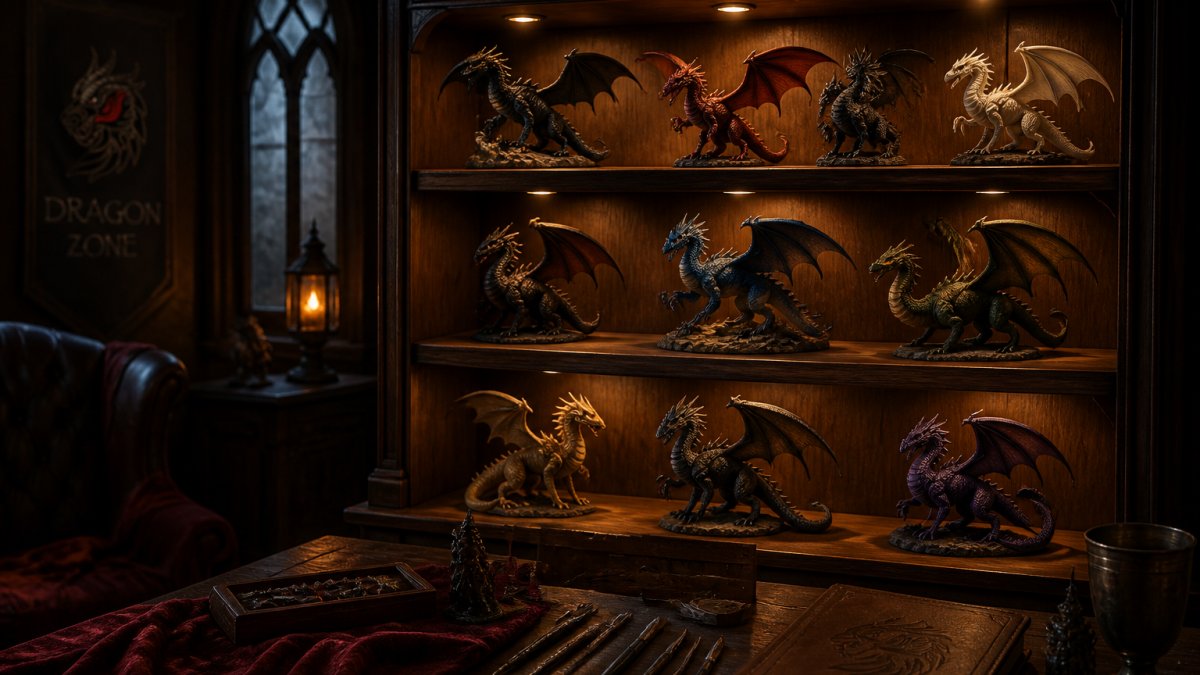
Lighting, Shelving and Arrangement Ideas
- Use warm, indirect lighting rather than direct overhead glare, which washes out painted detail.
- Vary shelf heights so taller pieces sit at the back and smaller ones step forward.
- Group by theme or element rather than by size alone.
Treat each shelf as its own small scene rather than a storage row.
Caring for Fantasy Art Collectibles: A Practical Guide
Caring for fantasy art collectibles is mostly about managing three enemies: dust, sunlight, and humidity. Get those under control and most pieces will look the same in five years as they do today.
Handle figurines by the base where possible. Oils from fingers dull painted finishes, and thin extremities are the first thing to snap if a piece is picked up by the wing or tail.
Protecting Prints and Figurines From Dust, Sun and Humidity
Risk |
What It Does |
Practical Fix |
|---|---|---|
Dust |
Settles in fine detail and dulls colour |
Soft brush or microfibre cloth, regularly |
Direct sun |
Fades inks and painted finishes |
Display away from windows, use UV-filtering glass |
Humidity |
Warps paper, affects some finishes |
Keep prints framed and off damp walls |
Handling |
Chips paint, snaps thin parts |
Lift by the base, not the wings |
Storage |
Scratches and knocks |
Wrap in acid-free tissue, box flat |
For prints, framing behind glass with a UV filter is the single most effective step. For figurines, a closed cabinet does more for preservation than any cleaning routine.
Spotlight on Fantasy Artist Merchandise in Australia
Fantasy artist merchandise in Australia gives collectors a way to own work by artists they follow without commissioning an original.
Anne Stokes is one of the most recognisable names in the space. Her Age of Dragons collection includes elemental dragon figurines, among them the Desert Dragon, Fire Dragon, Forest Dragon, Water Dragon, and Rock Dragon.

Lisa Parker's work sits in similar territory, known for atmospheric, often gothic imagery. Officially licensed merchandise featuring their artwork provides another way to collect and enjoy their work.
Authenticity and Licensing: What Collectors Should Know
When buying merchandise featuring an established artist's work, licensing helps distinguish authorised products from unauthorised reproductions.
A few practical checks:
- Look for the artist's name credited on the product or packaging.
- Buy from retailers who can tell you who the artist and manufacturer are.
- Be wary of prices that seem far below the going rate for a licensed piece.
Australian consumer law gives you rights when goods are faulty, not as described, or fail to do what they were sold to do. For detail on how they work, see the ACCC guidance on consumer guarantees.
Where to Find Fantasy Art and Events in Australia
Finding fantasy art locally means watching a few channels: artist markets and illustration fairs, gallery exhibitions, illustrator workshops, and online retailers who specialise in licensed work. Each rewards a different kind of collector, so use them in combination rather than picking one.
The four channels, and what each is actually good for
- Artist markets and illustration fairs. The best place to meet makers directly. Many illustrators take commission enquiries in person, and you can see how a print actually looks under gallery lighting. Stock is limited and rotates, so a piece you admire may not be there next time.
- Gallery exhibitions and installations. These tend to show original work and larger pieces rather than merchandise, useful for studying technique, scale and framing before you buy.
- Illustrator workshops. Hands-on sessions are less about buying and more about understanding how fantasy art is made.
Why the calendar matters more than any single event
Event dates shift from year to year, so check listings closer to the time and follow organisers or venues directly. A common pattern among collectors is to keep a short list of two or three recurring events and treat everything else as a bonus.
Online versus in person: a practical comparison
Factor |
Local market or fair |
Specialist online retailer |
|---|---|---|
Inspection before buying |
Yes, see the piece in person |
No, rely on product photos and descriptions |
Range |
Limited to what the stall brought |
Broad, across multiple artists and manufacturers |
Meeting the maker |
Often possible |
Rarely |
Returns if something is wrong |
Depends on the seller's own policy |
Covered by the retailer's returns process and consumer guarantees |
Shipping risk |
None, you carry it home |
Depends on packaging and carrier |
Neither channel is inherently better. Buy in person when you want to judge a piece with your own eyes; buy online when you want a specific licensed piece a local stall is unlikely to stock.
Buying from overseas sellers
If you buy from an overseas seller to save money, factor in shipping time, currency conversion, and the difficulty of returning a damaged item. Buying locally can mean shorter delivery times and a simpler return process if an item arrives damaged..
Commissioning Custom Art: What to Expect
Commissioning a fantasy illustrator is the most personal way to collect. You brief the artist, agree on scope and price, and receive a piece made for you alone.
Commissioning versus buying licensed merchandise
These are two different things, and it helps to be clear about which you want.
Commission |
Licensed merchandise |
|
|---|---|---|
What you get |
A one-off piece made to your brief |
A reproduction of an existing artwork |
Who owns the copyright |
Usually the artist |
The artist or rights holder |
Uniqueness |
One of one |
Part of an edition or open run |
Best for |
A personal centrepiece |
Building a collection around an artist you follow |
If you love an artist's existing work and want it on your shelf, licensed merchandise is the simpler path. If you want something that exists only for you, commission it.
Conclusion: Building a Fantasy Art Collection You'll Love
The collectors who stay happy with their shelves are the ones who bought slowly and bought what they liked. Licensing, care, and display all matter, but taste is what holds a collection together.
Dragon Zone stocks licensed fantasy merchandise and figurines, including the Anne Stokes Age of Dragons range, with every order dispatched from Brisbane.
Frequently Asked Questions
How do I know if fantasy art is officially licensed?
Check for clear attribution to the original artist, such as Anne Stokes or Lisa Parker, and look for official branding from the manufacturer. Reputable retailers like DragonZone list the artist, collection name and product details on each listing. If a piece claims to be by a well-known artist but lacks this information, treat it with caution. Licensed merchandise should always credit the artist and the manufacturer separately from the retailer.
What is the best way to display fantasy figurines and artwork?
Use open shelving or a dedicated cabinet with adjustable shelves so pieces are visible but protected. Keep figurines away from direct sunlight to prevent fading, and group them by theme or artist for visual impact. For prints, frame them with UV-resistant glass and hang them at eye level. Rotate your display every few months to keep the collection feeling fresh and to limit dust exposure.
How should I care for fantasy art prints and collectibles?
Dust figurines gently with a soft, dry microfibre cloth or a clean makeup brush. Avoid water or cleaning sprays on painted surfaces. For prints, keep them out of direct sunlight and away from humid areas like bathrooms or kitchens. Store any pieces not on display in acid-free tissue paper inside a sturdy box. Handle all items by the base or frame to avoid transferring oils from your skin.
What are the differences between fantasy art prints and merchandise?
Fantasy art prints are reproductions of original illustrations, often sold as limited or open editions on paper or canvas. Merchandise includes functional or decorative items like figurines, apparel, jewellery and home décor that feature licensed artwork. Prints are typically collected for the artwork itself, while merchandise lets you incorporate fantasy themes into everyday life. Both can be officially licensed and both can form part of a collection.
Where can I find licensed fantasy art in Australia?
Specialist online retailers like DragonZone stock licensed fantasy art and merchandise from artists such as Anne Stokes and Lisa Parker. You can also find pieces at local art markets, comic conventions and fantasy festivals held across Australia. Always verify that the seller credits the original artist and manufacturer. Buying from a trusted Australian retailer means faster shipping and clearer returns if something arrives damaged.
0 comments